Dehydration: Overview
Thirst can be a poor way of monitoring of your water needs. You can lose your thirst sensation and the critical perception of needing water. No longer recognizing a water need (unless very dehydrated), you can become gradually, increasingly, and chronically dehydrated with increasing age. A "dry mouth" may be a late sign of dehydration.
Diagnose your symptoms now!
- check your overall health status
- learn what you should be doing right now
- have a doctor review your case (optional)
Water has many functions in your body. Water:
- Transports vitamins, minerals, amino acids, glucose, hormones, enzymes and other substances throughout your body
- Assists chemical reactions such as the burning of glucose and the breakdown of fat for energy
- Carries digestive juices
- Lubricates joints, eyeballs, nasal passages, and the intestines
- Is a shock absorber for your eyes and spinal cord
- Maintains your body temperature – cools it by evaporation from the skin and lungs, throws off heat when blood is circulated near the body's surface – helps retain warmth in winter
- Removes wastes through the kidneys and helps solid waste pass through the intestines
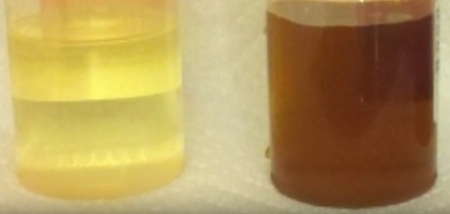
Urine color should be light yellow (left); darker urine (right) usually indicates dehydration, but may indicate disease.
Here are some interesting facts:
- 75% of Americans are chronically dehydrated. (This likely applies to half the world population)
- Even MILD dehydration will slow down one's metabolism as much as 3%.
- One glass of water shut down midnight hunger pangs for almost 100% of the dieters studied in a University of Washington study.
- Lack of water is the #1 trigger of daytime fatigue.
- Preliminary research indicates that 8-10 glasses of water a day (half of that coming from food and drinks other than plain water) could significantly ease back and joint pain for up to 80% of sufferers.
- A mere 2% drop in body water can trigger fuzzy short-term memory, trouble with basic math, and difficulty focusing on the computer screen or on a printed page.
- Drinking 5 glasses of water daily decreases the risk of colon cancer by 45%, the risk of breast cancer by 79%, and one is 50% less likely to develop bladder cancer. Are you drinking the amount of water you should every day?
Signs and Symptoms
Pain may be a warning of localized thirst; that is, the pain signal may be a warning of dehydration in that specific area (a regional thirst), for example low back pain, migraine headache, joint pain, and angina. Chronic dehydration may contribute to a reduction in lymph flow, which in turn may contribute to or cause varied problems.
Obvious signs of dehydration include: crinkled skin, dry mouth, excess thirst or absence of urination for over six hours.
Treatment and Prevention
It is a common error to substitute tea, coffee, caffeine-containing soft drinks, or alcohol-containing beverages for water. Do not consider alcoholic beverage, soda, coffee or tea as an equal substitute for water. Caffeine and alcohol act as diuretics, further increasing your water needs.
Sufficient daily water intake is essential for good health. Recommended amount depends on environment, body build and activity.
Remember that approximately half of your daily water intake comes from the food that you eat, so you only need to drink around half of your suggested requirement directly.
Calculate your overall daily need by taking your weight in kilograms (or your weight in pounds divided by 2), in ounces per day. For example, 140lbs / 2 = 70oz; 70oz / 8 = about 9 cups per day.
It is recommended by some that you not drink water with meals, unless you need to. Other doctors believe that the stomach needs a certain consistency to do its job and if we don't drink enough with our meals the stomach pulls water from the blood stream; if we drink too much with our meals the excess water simply gets absorbed. The logical recommendation, therefore, is to try both and see what works best for you.
Good times to drink water are on rising, at least 1⁄2 hour before meals and 2-3 hours after, and before bed. You need more if the temperature is hot and if you exercise. A general rule is to add an extra 2 glasses per day for every 5°F over 85°F if you are at rest, and more if you exercise.
References and Further Information
We recommend that you read Your Body's Many Cries for Water by Dr. Batmanghelidj, MD. It may be available from your local library. If purchased, you may be able to help others you think of while reading it!
"In my professional and scientific view, it is dehydration that is the biggest killer, more than any other condition you could imagine. The different aspects and 'chemical idiosyncrasies' of each individual's body reaction to the same pattern of dehydration have received different professional labels and have been treated differently and ineffectively." Dr. Batmanghelidj, MD.
Signs, symptoms & indicators of Dehydration:
Lab Values - Common
 High systolic blood pressure
Blood contains roughly 50% water, and less water in the body will lead to less water in the blood and therefore decreased blood volume. The brain senses this and signals the pituitary gland to secrete vasopressin, which causes blood vessels to narrow. This narrowing will directly increase blood pressure. Blood also becomes thicker when its water content is reduced. The heart must push harder to pump this thickened blood around the body, increasing the pressure inside blood vessels.
 High diastolic blood pressure
Dehydration leads to reduced blood volume, narrowing of the blood vessels, and thickened blood, all of which can cause increased blood pressure as it becomes harder for the heart to pump blood through the blood vessels.
Symptoms - Aging
Symptoms - Allergy
(Severe) allergies to certain foods
Allergies are the body's response to increased histamine levels. Histamine helps control the flow of water in the body and histamine levels will rise in an attempt to manage dehydration, leading in some cases to increased allergic reactions and allergy-like symptoms. [Endocrinology, Volume 136, Issue 5, 1 May 1995, pp.2189-97]
Symptoms - Food - Beverages
 Excessive/constant thirst
Thirst is a feeling signaled by the brain whenever water levels are too low in the body.
Symptoms - Food - General
Weak/loss of appetite
While there is no direct link from dehydration to reduced appetite, water is vital for proper digestion. Dehydration impairs the digestive process, food remains in the stomach longer, so we feel full longer and don't feel like eating again so soon.
Symptoms - Gas-Int - General
Regular/frequent unexplained nausea
Water is essential to the biochemical reactions within our bodies, including those related to the stomach. When dehydration limits the proper functioning of the stomach, it can cause nausea. The reverse is also true, however: A nauseous person will often become dehydrated because drinking fluids can worsen nausea or induce vomiting.
Recent onset/chronic nausea or nausea for 1-3 months
When dehydration limits the proper functioning of the stomach, it can cause nausea.
Symptoms - General
Dizziness when standing up
When the body is dehydrated it is less able to control blood pressure. When blood pressure is too low, the brain may not receive sufficient amounts of oxygen, leading to dizziness. If blood pressure falls further due to suddenly standing up from a lying or sitting position (this is called Orthostatic Hypotension), dizziness can worsen.
Symptoms - Head - Eyes/Ocular
(Severe) vision disturbances
Vision disturbances can occur due to eye strain resulting from reduced lubrication (tear production). The body responds to dehydration by trying to conserve as much fluid as possible, including fluid in the eyes.
(Very) dry eyes
The body's response to dehydration is to conserve as much fluid as possible, including fluid in the eyes, which can lead to dry eyes.
Irritated eyes
Dehydration causes the body to conserve fluids, leading to dry eyes which can become red, swollen, and irritated.
Symptoms - Head - Mouth/Oral
(Slight/severe) tongue swelling
Dehydration causes decreased saliva production, which can leave the tongue feeling dry and swollen.
Symptoms - Head - Nose
Occasional/regular/frequent runny nose
Studies have confirmed that dehydration triggers histamine production in order to help conserve water. As histamine levels increase, symptoms of seasonal allergies – such as runny nose, sneezing, and itchy eyes – can develop. [Endocrinology, Volume 136, Issue 5, 1 May 1995, pp.2189-97]
Symptoms - Metabolic
Adverse reaction to delayed meals
When we skip meals, we often also skip the drinks that go with the food. If your hydration status is already marginal, a delayed meal may be enough to trigger dehydration symptoms.
Occasional/frequent 'chills'
Water stores heat. Loss of water (dehydration) decreases the body's ability to regulate its temperature, which may lead to chills or shivering.
Symptoms - Mind - Emotional
Being/being very easily irritated
Many bodily functions – including brain function – are affected by dehydration due to the resulting mineral imbalances. One study of dehydration and mood in 25 young women found that those who were just 1% dehydrated reported irritability and changes in mood. [The Journal of Nutrition, Volume 142, Issue 2, 1 February 2012, pp.382-8]
Increased/severe emotional instability
The brain is composed 75% of water. Dehydration causes the brain to shrink slightly [Hum Brain Mapp. 2011 Jan;32(1): pp.71-9] and also disturbs the overall balance of minerals within the body. These factors affect brain function and emotional stability. One study found that women who were just 1% below optimal hydration reported irritability and other mood changes. [The Journal of Nutrition, Volume 142, Issue 2, 1 February 2012, pp.382-8]
Symptoms - Mind - General
(Minor/severe) hallucinations
Dehydration can reduce blood flow and therefore oxygen supply to the brain, which can cause hallucinations.
Being a lethargic person or being highly lethargic
The body requires water for every task it performs, so a lack of water will make it harder to complete these tasks. Dehydration causes a drop in blood volume, which makes it harder for oxygen and nutrients to reach brain, skin, and muscles. Reduced muscle efficiency makes movement more challenging and this can lead to lethargy.
Occasional/frequent confusion/disorientation
Dehydration reduces blood flow to the brain and therefore also the amount of oxygen that it receives, which can cause confusion.
Symptoms - Nails
Brittle fingernails
Nails can become brittle due to disease or dehydration. Nail dehydration can be caused either by external factors such as chemicals, or by the body being dehydrated and trying to conserve water.
Symptoms - Nervous
Numb/burning/tingling extremities
Dehydration can cause an electrolyte imbalance. Sodium is an electrolyte involved in nerve signaling, so an imbalance can cause numbness, burning, or tingling sensations.
Symptoms - Reproductive - General
Morning sickness
Studies have demonstrated a relationship between nausea in pregnancy and impaired liver function. The liver is responsible for filtering toxins from the blood and dehydration causes the blood to become thicker, making it harder for the liver to do its job. Impaired liver function and the resulting buildup of toxins in the blood can cause nausea and morning sickness.
Symptoms - Skeletal
(Minor/major) joint pain/swelling/stiffness
Joint cartilage is composed 70%-80% of water, a lack of which will lead to increased friction, degeneration and damage. This in turn can manifest as joint pain, swelling, and stiffness.
Symptoms - Sleep
(Frequent) difficulty falling asleep
Dehydration can cause insomnia through a variety of mechanisms. It causes increased heart rate, headaches, body and muscles aches, and anxiety – all of which make it harder to sleep comfortably. Dehydration also leads to a deficiency of melatonin, which is a major cause of insomnia because it regulates our circadian rhythm (sleep/wake cycle). Dehydration reduces the amount of tryptophan available to the pineal gland, which produces melatonin.
Drinking ½ a pint to a pint (250 to 500ml) of water about an hour before sleeping will allow most of it to pass through the body and leave enough to run the body's natural processes while sleeping.
Symptoms - Urinary
Infrequent daytime urination
While dehydrated, the body tries to conserve as much fluid as possible. The kidneys will reduce the amount of water they extract from the blood, resulting in less frequent urination.
Dark urine color
When dehydrated, the body tries to conserve as much fluid as possible by reducing the amount of water the kidneys extract from the blood. At the same time, the kidneys are still removing toxins and waste, increasing their concentration in the urine and giving it a noticeably darker color.
Conditions that suggest Dehydration:
Aging
Hearing Loss
The inner ear is filled with endolymph – a finely balanced fluid that requires an adequate supply of nutrients to transmit sound. When dehydration sets in, blood supply decreases and mineral imbalances occur, causing symptoms such as dizziness/vertigo, poor balance, hearing loss, tinnitus, and a feeling of fullness in the ears.
Allergy
Indoor Allergies
Histamine has several functions within the body. One is to facilitate an immune response to allergens, and another is to regulate available water. Dehydration causes histamine levels to rise in order to manage reduced water levels, but this increase in histamine also produces allergy-like symptoms.
Circulation
Angina
Dr. Bantmanghelidj, MD in his book Your Body's Many Cries for Water reports many cases of angina attacks being reduced by drinking adequate water.
Coronary Disease / Heart Attack
Dehydration thickens the blood (which is about 50% water) and decreases its volume, thus lowering blood pressure. In an attempt to normalize (increase) blood pressure, the body constricts blood vessels. The heart is then forced to pump thicker blood through narrower vessels, putting it at increased risk of failure. A large study of 8,280 male and 12,017 female subjects found that staying sufficiently hydrated reduced the risk of coronary disease by 46% in men and 59% in women. [Am J Epidemiol. 2002 May 1;155(9): pp.827-33]
Dental / Oral
Dry Mouth
The body will conserve fluid in various ways when we are dehydrated and one of these is a reduction in saliva production, which results in a drier mouth.
Digestion
Heartburn / GERD / Acid Reflux
Dr. Batmanghelidj, author of Your Bodies Many Cries for Water, believes that in the same way we have a "hunger pain" signal, we also have a "thirst pain" signal in the body, and that it is called dyspepsia (heartburn).
Glandular
Lymphatic Congestion
Drinking plenty of water makes sure the body is well-hydrated and helps the lymphatic system do its job of flushing toxins and waste from the body.
Lab Values
Male-Specific
Erectile Dysfunction (ED, Impotence)
All activity within the body requires adequate hydration – including erection maintenance. Although dehydration is usually not the only cause, there are various ways in which it can worsen ED. Dehydration reduces blood volume and causes blood vessels to become narrower, restricting blood flow to all parts of the body, including the penis. Sexual arousal also requires the right state of mind; even mild dehydration can cause confusion, irritation, tension, anxiety, mood swings, and lethargy, none of which are conducive to getting or maintaining an erection.
Mental
Migraine/Tension Headaches
Dehydration is an important trigger of migraines and tension headaches. The mechanisms are not entirely clear, but there appear to be several. Dehydration leads to:
- Narrowed blood vessels including those in the brain: A contributing factor for headaches
- Histamine release to induce thirst: Histamine can trigger migraines
- Decreased serotonin production: Changes in serotonin levels can trigger migraines
- Oxidative stress: A major trigger of migraines [Dr. Jonathan M. Borkum, Headache, Vol. 58, Issue 1, January 2018: pp.118-35]
Dizziness
Dehydration can cause a drop in blood pressure, which reduces the amount of oxygen that the brain receives and causes dizziness. Dehydration can also lead to an inner ear fluid imbalance, which can cause dizziness.
Vertigo
Dehydration can cause an inner ear fluid imbalance and/or a drop in blood pressure, both of which can lead to vertigo.
Metabolic
Susceptibility To Hangovers
The most obvious source of headaches due to hangovers is dehydration caused when alcohol suppresses anti-diuretic hormone. This hormone normally orders the body to conserve water, but alcohol dulls the command, causing people to lose far more water to urination than they take in with the alcohol.
The body reacts to the open floodgates by borrowing water from other organs, such as the brain. As a result, the brain shrinks. While that may not cause pain by itself, the brain has a covering called the dura that is connected to the skull by pain-sensitive filaments. Deformation of the dura can cause the headaches that come with a hangover.
Excessive Fatigue
Being just 5% dehydrated can lead to fatigue due to decreased blood volume and a reduced supply of oxygen and nutrients to the brain and muscles.
Musculo-Skeletal
Gout / Hyperuricemia
Gout can be caused by dehydration and the use of diuretics such as coffee or alcohol.
Muscle Cramps / Twitching
Excess sweating or dehydration can deplete minerals in the body – minerals that are important for good muscle function, such as sodium, potassium, calcium, magnesium and phosphorus.
General Weakness
A loss of 4-5% of body weight of fluid decreases the capacity for hard muscular work by 20-30%.
Neck / Spine
Neck Pain
If the body is dehydrated, the intervertebral disks in the cervical spine will also be dehydrated, possibly causing neck pain.
Low Back Pain
The intervertebral discs between the vertebrae in the spine consist of a tough exterior filled with a gel-like substance that is primarily water. Daily activity puts weight on the spine, especially the lower spine; discs compress and some of the fluid is squeezed out. These discs rehydrate while we sleep at night, but when we are dehydrated this rehydration may be incomplete. Discs that are not adequately hydrated cannot fully absorb shock and can rupture more easily, leaking fluid, irritating spinal nerves, and causing lower back pain.
Sciatica
Dehydration can lead to dehydrated intervertebral disks in the spine which can impinge upon the sciatic nerve, causing sciatica.
Nervous System
Tremors
Dehydration can cause a loss of electrolytes such as potassium and sodium, which are required for normal muscle control and nerve function. Without these electrolytes, muscle shaking or tremors can be experienced.
Organ Health
Respiratory
Skin-Hair-Nails
Dry skin
As the body tries to conserve remaining fluid, water is drawn from the skin to be used in more important processes.
Sleep
Risk factors for Dehydration:
Diet
Caffeine Intoxication
Dehydration may result from the increased urinary frequency brought on by caffeine.
Excess Protein Consumption
High protein intakes may lead to dehydration due to excessive urine output (related to ketone production).
Digestion
Short Bowel Syndrome
Short bowel syndrome is a malabsorption disorder in which water and nutrients are not properly absorbed because a significant portion of the small intestine is missing. Water remains in the stool, causing diarrhea and dehydration.
Ulcerative Colitis
Dehydration occurs in patients with severe diarrhea as seen in ulcerative colitis.
Hiatal Hernia
Symptoms of hiatal hernia such as vomiting, nausea, acid reflux and difficulty swallowing can increase the risk of becoming dehydrated.
Gastric/Peptic/Duodenal Ulcers
Stomach ulcers can cause vomiting, nausea and difficulty drinking, all of which can increase the risk of dehydration.
Glandular
Low Adrenal Function / Adrenal Insufficiency
The adrenal glands produce aldosterone, which is a hormone involved in regulating the body's fluid and electrolyte levels. Adrenal fatigue reduces aldosterone production, which results in dehydration and low electrolyte levels.
Skin-Hair-Nails
Excessive Sweating
Excessive sweating results in the body losing large amounts of water which, if not replenished, causes dehydration.
Symptoms - Food - Beverages
Sub-optimal/insufficient water consumption
Our water needs can be supplied by any food or drink with water content, although plain water is best. The amount of water a person needs depends on various factors, including gender, ideal weight (not actual weight), exercise level, and climate. Consuming less than the recommended daily amount of water over an extended period will generally lead to a state of dehydration.
Low/moderate/high alcohol consumption
Vasopressin is an antidiuretic hormone that enables reabsorption of water. Alcohol suppresses the body's secretion of vasopressin, causing the kidneys to remove more water from the body than they should. Drinking excess alcohol can also result in vomiting, and therefore further dehydration.
(High) coffee consumption
Caffeine has a mild diuretic action and may thus worsen dehydration, except when taken during exercise. One study found that the difference between ingesting the same volume of a non-caffeinated sports drink and the same drink containing caffeine (25mg per 100ml) was that urine production after the caffeinated drink was significantly higher at rest by 31%. However, ingestion of caffeinated beverages during physical activity did not increase urine production and exacerbate dehydration. [International Journal of Sports Medicine. 18: pp.4046-4053, 1997]
Counter-indicators
 (High/moderate) soft drink consumption
Drinking any water-containing fluid can hydrate you. Even though soft drinks generally contain caffeine (a mild diuretic) and/or sugar (the body tries to get rid of excess glucose through increased urine output), the overall effect of soft drinks is to reduce the risk of dehydration.
(High) green tea consumption
Although green tea does count towards your daily water intake, it is also a natural diuretic so drinking it in excess can actually cause dehydration.
Drinking fruit/vegetable juice
Fruit and vegetable juices are 85-90% water and therefore almost as good as plain water for preventing dehydration.
 Sufficient water consumption (confirmed)
The amount of water a person needs depends on various factors, including gender, ideal weight (and therefore height), exercise level, and climate. Making sure that you are consuming your recommended daily amount will prevent dehydration.
Concerned or curious about your health? Try The Analyst™

Symptom Entry

Diagnosis

Suggestions

LifeMeter®

Explanations

Review (optional)
Dehydration can lead to:
Mental
Stress
Stress can cause dehydration, but dehydration can also cause stress – a vicious cycle that can be broken by drinking more water during the day. When we are stressed, the heart beats faster, we sweat more, and we breathe more heavily, losing fluid. Conversely, dehydration leads to higher levels of the stress hormone cortisol.
Dehydration could instead be:
Aging
Alzheimer's Disease
Due to older people's precarious homeostatic mechanisms they are much more prone than younger people to dehydration and electrolyte imbalances. This may induce a confusional state which may be mistaken for a dementing illness such as Alzheimer's.
Recommendations for Dehydration:
Diet
 Increased Water Consumption
The treatment for dehydration is of course very simple: drink more water!
Caffeine/Coffee Avoidance
When taken in larger amounts, caffeine is a diuretic that causes the kidneys to remove more water from the body.
 Increased Fruit/Vegetable Consumption
With their high water content, fruits and vegetables can help keep the body hydrated.
Report by The Analyst™
Click to see sample report
Click to see sample report
Health problems rarely occur in isolation or for obvious reasons
Your body is a highly complex, interconnected system. Instead of guessing at what might be wrong, let us help you discover what is really going on inside your body based on the many clues it is giving.
Our multiple symptom checker provides in-depth health analysis by The Analyst™ with full explanations, recommendations and (optionally) doctors available for case review and answering your specific questions.
KEY
Weak or unproven link:
may be a sign or symptom of; may suggest; may increase risk of; is very occasionally misdiagnosed as
Strong or generally accepted link:
is often a sign or symptom of; often suggests; often increases risk of; often leads to
Definite or direct link:
is a sign or symptom of; strongly suggests; increases risk of
Strong counter-indication:
often decreases risk of
Definitely or absolutely counter-indicates:
decreases risk of
May be useful:
may help with
Very useful:
is highly recommended for
Last updated: Sep 23, 2022