Heavy Metal Toxicity: Overview
Heavy metal toxicity is a very general subject and people experience widely varying symptoms in response to heavy metal poisoning.
Diagnose your symptoms now!
- check your overall health status
- understand what's happening to your body
- have a doctor review your case (optional)
There are many individual metals causing varying degrees of illness based on acute and chronic exposures. Heavy metals is the term used for a group of elements that have particular weight characteristics. They are on the "heavier" end of the periodic table of elements. Some heavy metals – such as cobalt, copper, iron, manganese, molybdenum, vanadium, strontium, and zinc – are essential to health in trace amounts. Others are non-essential and can be harmful to health in excessive amounts. These include cadmium, antimony, chromium, mercury, lead, and arsenic – these last three being the most common in cases of heavy metal toxicity.
Causes and Development

Lead is the most common heavy metal contaminant, often entering the water supply through old lead pipes.
Heavy metals enter our tissues via air inhalation, diet and through the skin during manual handling.
Sources of toxicity can include environmental, water supply, industrial, hobbies, and others, thus a full history of the person's work and living habits can help pinpoint potential heavy metal sources.
Causes of arsenic toxicity include ingestion of arsenic (found in insect poisons), skin contact (e.g. some linseed oils) and even drinking water.
Signs and Symptoms
As an example of the scope of a heavy metal's toxicity, lead can affect the nervous system, gastrointestinal system, cardiovascular system, blood production, kidneys, and reproductive system.
Symptoms of heavy metal toxicity include mental confusion, pain in muscles and joints, headaches, short-term memory loss, gastrointestinal upsets, food intolerances/allergies, vision problems, chronic fatigue, and others. The symptoms are so vague that it is difficult to diagnose based on symptoms alone.
Arsenic
Symptoms include nausea or vomiting, abdominal pain, diarrhea, garlic odor on breath, excessive salivation, headache, vertigo, fatigue, paresthesia, paralysis, kidney failure, progressive blindness, and mental impairment. Signs include mottled brown skin, hyperkeratosis (increased pigmentation) of palms and soles, cutis edema, transverse striate Leukonychia, perforation of nasal septum, eyelid edema, coryza, limb paralysis and reduced deep tendon reflexes. Mental symptoms include apathy, dementia, and anorexia.
Lead
Signs and Symptoms include combinations of gastrointestinal complaints, hypertension, fatigue, hemolytic anemia, abdominal pain, nausea, constipation, weight loss, peripheral neuropathy, cognitive dysfunction, arthralgias, headache, weakness, convulsions, irritability, impotence, loss of libido, depression, depression of thyroid and adrenal function, chronic renal failure, gout. A patient with lead poisoning may have a combination of symptoms – or no symptoms at all until the condition has progressed. Mental symptoms include restlessness, insomnia, irritability, confusion, excitement, anxiety, delusions, and disturbing dreams.
Mercury
Mercury toxicity has been linked to, among other things, mercury dental fillings, particularly when people have a large number of them. Symptoms include a metallic taste in the mouth, excess salivation, gingivitis, tremors, stomach and kidney troubles. Mental symptoms include shyness, irritability, apathy and depression, psychosis, mental deterioration, and anorexia.
Diagnosis and Tests
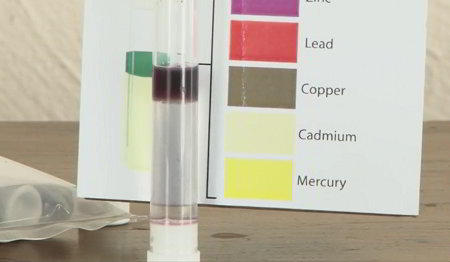
Heavy metal test kits can be used at home to determine whether further evaluation is necessary.
If a specific diagnosis cannot be made, a general approach to metal toxicity may be beneficial. The list of heavy metals includes mercury, lead, aluminum, antimony, arsenic, bismuth, cadmium, chromium, cobalt, copper, silver, zinc and tin. Mercury poisoning will be dealt with separately as "Mercury Poisoning (Amalgam Illness)".
Arsenic
Useful lab tests include Urinalysis (Oliguria, Hematuria, Hemoglobinuria); Complete Blood Count and Peripheral Smear (Macrocytic Anemia); Tissue Exam (reveals arsenic deposits – urine, nails, hair) and Serum Arsenic levels.
Treatment and Prevention
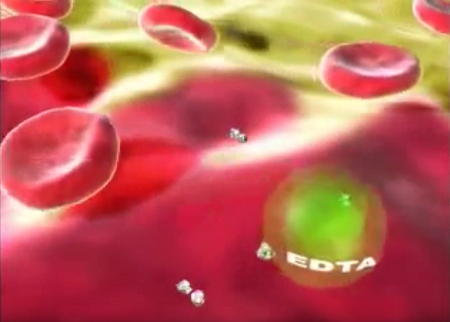
EDTA (green) in the bloodstream binds with heavy metals (light gray specks) and carries them out of the body.
The first step in treating any heavy metal toxicity is to identify the toxic elements and begin the removal process. The easiest screening process is a Hair Analysis. Additional testing involves the use of chelating drugs along with a 24-hour urine collection to determine levels of heavy metals. From here, treatment is based on the individual and will usually involve the use of metal chelating drugs or intravenous EDTA chelation.
For many patients, intravenous Vitamin C and replacement mineral infusions are also recommended to support the body through the metal removal process. Once laboratory tests indicate that the heavy metals are undetectable, treatment is considered complete. Often many – if not all – symptoms previously experienced will have resolved, though some may linger, indicating residual damage to organ systems. Therapies can then be targeted to these systems and any specific problems remaining.
Symptoms will often begin to improve within weeks or even days of commencing treatment. Therapy may last from 6 months to 2 years.
Prognosis; Complications
Although complete cure is possible, many people suffer the effects of toxicity for extended periods. Some of the damage, for instance to the liver or brain, may not be fully reversible. Others find that their food intolerances will not be completely remedied. Only time will answer that question.
Cadmium may promote skeletal demineralization and increase bone fragility and fracture risk.
Signs, symptoms & indicators of Heavy Metal Toxicity:
Lab Values - Cells
Lab Values - Chemistries
Symptoms - Head - Eyes/Ocular
Symptoms - Nails
 Moving white lines across nails
Mees' Lines (transverse white lines) are a sign of arsenic poisoning.
Symptoms - Nervous
Symptoms - Skeletal
Symptoms - Sleep
Conditions that suggest Heavy Metal Toxicity:
Aging
 Parkinson's Disease
Metals such as iron, manganese, cadmium, copper, and mercury (from dental amalgams) have been implicated as causative factors in the development of Parkinson's disease.
Alzheimer's Disease
Because Alzheimer's patients often exhibit increased concentration of heavy metals in their blood and brain, toxic exposure is believed to play an important role.
Metabolic
Hypoglycemia
Heavy metals such as mercury, cadmium, lead and thallium poison the glucose metabolizing catalysts, thus reducing the flow of energy throughout the body. It is interesting to note that the symptoms of heavy metal poisoning are similar to symptoms associated with hypoglycemia i.e. hyperactivity, mood swings, manic depressive behavior, poor concentration and impulsive and unpredictable behavior.
Nervous System
Symptoms - Environment
Counter-indicators
Risk factors for Heavy Metal Toxicity:
Supplements, Medications, Drugs
(Past) aluminum-based antacid use
Antacids that contain aluminum are potentially dangerous. They should not be freely used for a condition that will respond to an increase in water intake such as stomach ulcers.
Counter-indicators
Symptoms - Environment
Concerned or curious about your health? Try The Analyst™

Symptom Entry

Diagnosis

Suggestions

LifeMeter®

Explanations

Review (optional)
Heavy Metal Toxicity suggests the following may be present:
Addictions
Cigarette Smoke Damage
Tobacco smoking is the most important single source of cadmium exposure in the general population. It has been estimated that about 10% of the cadmium content of a cigarette is inhaled through smoking. The absorption of cadmium from the lungs is much more effective than that from the gut, and as much as 50% of the cadmium inhaled via cigarette smoke may be absorbed.
On average, smokers have 4-5 times higher blood cadmium concentrations and 2-3 times higher kidney cadmium concentrations than non-smokers. Despite the high cadmium content in cigarette smoke, there seems to be little exposure to cadmium from passive smoking. No significant effect on blood cadmium concentrations could be detected in children exposed to environmental tobacco smoke.
Heavy Metal Toxicity can lead to:
Environment / Toxicity
Mental
Recommendations for Heavy Metal Toxicity:
Amino Acid / Protein
 L-Glutathione
One of the body's normal mechanisms for dealing with heavy metals involves glutathione and normal levels of this protein should thus be ensured. The rate-limiting precursors are the amino acids cysteine (or N-acetyl-cysteine) and glutamine.
Cysteine / N-Acetylcysteine (NAC)
Cysteine acts as a complexing agent by attaching itself to lead and carrying it out of the body. It is a heavy metal scavenger and liver protector.
Botanical / Herbal
Cilantro
Shown in clinical trials and research to mobilize mercury, tin and other toxic metals stored in the brain and spinal cord and move them rapidly out of those tissues. This is a revolutionary discovery and makes Cilantro the first known substance that mobilizes mercury from the CNS (Central Nervous System).
 Chlorella
Chlorella can mobilize mercury from inside the brain and from non-neurologic structures (muscles, ligaments, connective tissue and bone).
Sodium Alginate
Binds with unwanted toxic metals and removes them from the body through the intestinal tract.
Garlic
Garlic chelates heavy metals such as cadmium, gold, lead and mercury, and acts as a detoxifier.
Detoxification
 Chelation Therapy
EDTA is so effective at removing unwanted minerals and metals from the blood, it has been the standard-FDA-approved-treatment for lead, mercury, aluminum and cadmium poisoning for more than 50 years.
Attapulgite
Activated Attapulgite (clay) chelates (bonds) with heavy metals throughout the intestinal tract.
Diet
High/Increased Fiber Diet
Sodium alginate as well as other gel-forming fibers have been shown to inhibit heavy metal uptake in the gut.
Hormone
Laboratory Testing
Hair Analysis
Hair analysis is a reasonable and inexpensive first step toward diagnosing heavy metal toxicity.
Mineral
Magnesium Malate
Magnesium malate may be one of the few compounds capable of pulling aluminum from the body over time.
Selenium
Selenium is able to combine with metals such as cadmium and mercury to reduce their toxicity.
Zinc
Zinc inhibits the uptake of cadmium and lead by various tissues in the body. Zinc is a well known antagonist to copper. It has been used to treat Wilson's Disease (in which there is an excess of copper).
Magnesium
Magnesium is thought to reduce lead toxicity and its buildup, possibly through competing for absorption.
Supplements
Alpha Lipoic Acid
Sources of sulfur such as alpha lipoic acid, MSM and garlic are helpful for protection against heavy metals in general and specifically useful in mercury toxicity. Alpha lipoic acid should not be used alone, as it only mobilizes mercury with a weak bond. Without additional chelators present, such as DMPS or DMSA, the mercury may just redistribute elsewhere in the body instead of being removed.
Vitamins
Vitamin C (Ascorbic Acid)
Helps to protect us from heavy metals, particularly lead and arsenic which can poison certain enzyme reactions in the body.
Bioflavonoids
Bioflavonoids are known for their ability to chelate (bond with and remove) metals from the body.
Report by The Analyst™
Click to see sample report
Click to see sample report
Health problems rarely occur in isolation or for obvious reasons
Your body is a highly complex, interconnected system. Instead of guessing at what might be wrong, let us help you discover what is really going on inside your body based on the many clues it is giving.
Our multiple symptom checker provides in-depth health analysis by The Analyst™ with full explanations, recommendations and (optionally) doctors available for case review and answering your specific questions.
KEY
Weak or unproven link:
may be a sign or symptom of; may suggest; is very occasionally misdiagnosed as
Strong or generally accepted link:
is often a sign or symptom of; often suggests; often increases risk of; often leads to

Definite or direct link:
strongly suggests

Strong counter-indication:
often contraindicates; often decreases risk of
May be useful:
may help with
Moderately useful:
often helps with
Very useful:
is highly recommended for
Last updated: Aug 24, 2023