Deep Vein Thrombosis (DVT): Overview
Alternative names: DVT, Deep Venous Thrombosis, Blood Clot In The Legs, Venous Thromboembolism (VTE).
Deep Vein Thrombosis occurs when a blood clot forms in a vein that is deep inside the body, usually in the lower leg or thigh.
Diagnose your symptoms now!
- check your overall health status
- learn what you should be doing right now
- have a doctor review your case (optional)
DVT is a serious condition because a blood clot (thrombus) that has formed in a vein can break loose and travel to the lungs or another critical organ, potentially causing death.
Causes and Development; Contributing Risk Factors
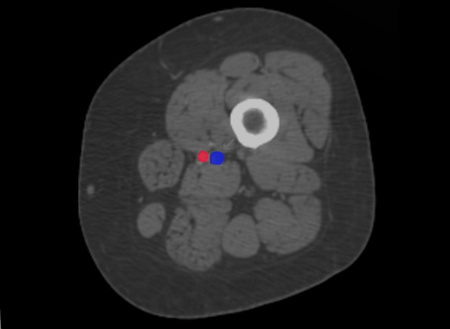
The deep venous system returns blood from the lower extremities. CT scan of leg shows vein (blue), artery (red), bone (white).
Blood clots form in the body's deep veins for four main reasons: A damaged inner lining of the vein; slower-than-normal blood flow; thicker-than-normal blood; or blood that is more likely to clot.
The main risk factor for developing Deep Vein Thrombosis is keeping your legs still for long periods of time, for example while in a car or airplane, or during bed rest. This significantly increases the risk a clot forming, so those at risk should get up and walk every 30-60 minutes.
The more risk factors a person has, the greater their chances of developing Deep Vein Thrombosis. Other risk factors include:
- Age: Risk starts to rise rapidly after age 50
- Heredity: If others in your family have had DVT or a blood clotting disorder
- Smoking
- Being overweight
- Vein trauma due to injury or surgery
- Birth control pills: Can increase blood clotting
- Hormone replacement therapy (HRT): Can increase blood clotting
- Some forms of cancer increase levels of blood clotting substances
- Some cancer treatments increase risk of blood clots
- Heart failure, leading to reduced heart and lung function
- Inflammatory bowel diseases such ass Crohn's disease or ulcerative colitis
Signs and Symptoms
Deep vein thrombosis can cause leg pain, but in about half of all cases, deep vein thrombosis occurs without any noticeable symptoms. When symptoms occur, they include:
- Swelling of the affected leg, ankle or foot;
- Leg, ankle or foot pain that often starts in the calf and may feel like cramping or a "charley horse";
- Redness and warmth in the affected area.
Signs of a pulmonary embolism include:
- Unexplained sudden shortness of breath;
- Chest pain or discomfort worsened by taking a deep breath or coughing;
- Lightheadedness, dizziness, or fainting;
- Coughing up blood;
- A feeling of anxiety or nervousness.
Prognosis; Seek medical attention if...
Many deep vein thromboses disappear on their own. However, if the clot may travel to the lungs, blocking blood flow and causing a Pulmonary Embolism. A Pulmonary Embolism is potentially fatal.
A doctor should be consulted if signs or symptoms of deep vein thrombosis develop. If signs or symptoms of a pulmonary embolism are present, seek medical attention immediately.
On This Page
Deep Vein Thrombosis:Preventive measures against Deep Vein Thrombosis (DVT):
Drug
 Aspirin
Aspirin has long been known to reduce the risk of heart attack, stroke and deep vein thrombosis by thinning the blood and helping to prevent dangerous clots from forming.
Concerned or curious about your health? Try The Analyst™

Symptom Entry

Diagnosis

Suggestions

LifeMeter®

Explanations

Review (optional)
KEY
Moderately useful:
often prevents

Very useful:
usually prevents
Last updated: Jan 16, 2022